



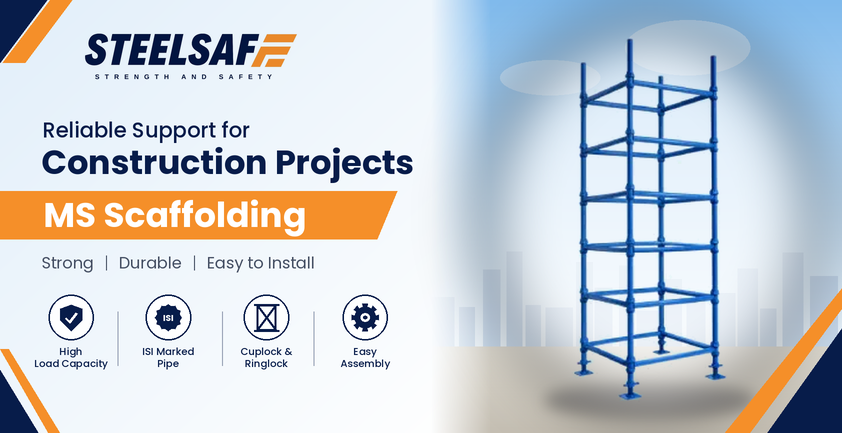
Choosing the right MS Scaffolding equipment is important for creating a stable and suitable working structure at construction sites. Different projects have different requirements depending on their height, design, working conditions and load demands. Understanding the available scaffolding systems and components helps contractors make informed decisions.
-
What Is MS Scaffolding?
MS scaffolding, or mild steel scaffolding, is a temporary structure used to provide access and working platforms during construction, repair, painting and maintenance activities. A properly designed MS Scaffolding System offers a practical solution for projects that require temporary access at height.
-
Types of MS Scaffolding Systems
Two commonly used modular systems are Cuplock and Ringlock scaffolding.
1. Cuplock Scaffolding
Cuplock Scaffolding uses a cup-and-blade connection mechanism to connect horizontal ledgers to vertical standards. It is commonly used in building construction, formwork support and infrastructure projects where a modular arrangement is suitable.
2. Ringlock Scaffolding
Ringlock Scaffolding uses rosette-shaped connection points on vertical standards to connect compatible horizontal and diagonal members. Its multiple connection positions make it useful for projects with complex layouts and changing site requirements.
The right system depends on the project design, required configuration, component compatibility and site conditions.
-
Important MS Scaffolding Components
Before selecting MS Scaffolding Components, consider the purpose of each part within the complete structure.
Standards: Vertical members that form the main scaffold framework.
Ledgers: Horizontal members connecting the standards.
Transoms: Members that support scaffold boards or working platforms, according to the design.
Diagonal braces: Components that help provide stability.
Base jacks: Adjustable components used to accommodate suitable base-level variations within design limits.
Couplers and clamps: Fittings used to connect compatible scaffold members.
Each component must be compatible with the selected system and suitable for the intended application.
-
How to Choose the Right MS Scaffolding Equipment
When selecting MS Scaffolding Equipment, evaluate the following factors:
1. Project Type: Building construction, infrastructure work, industrial maintenance and formwork may require different scaffold configurations.
2. Height and Layout: Consider the working height, available space, access requirements and site geometry.
3. Load Requirements: Account for workers, tools, materials and other applicable loads when planning the structure.
4. Material Quality: Check the steel specifications, dimensions, weld quality and surface finish of the components.
5. System Compatibility: Ensure that all components, connections and accessories are compatible with the selected scaffolding system.
6. Safety and Installation: Use a properly designed scaffold erected and inspected by competent personnel. Follow applicable safety requirements and manufacturer instructions.
-
Choose MS Scaffolding for Your Construction Project
SteelSafe offers MS scaffolding products and components for construction and infrastructure applications. Whether your project requires a modular system or individual scaffolding components, selecting equipment according to the project design and specifications is essential.
Explore SteelSafe's MS scaffolding products to learn more about the available options for your construction requirements.
-
Conclusion
Choosing the right MS scaffolding equipment starts with understanding your project's height, layout, load requirements and working conditions. By comparing Cuplock Scaffolding, Ringlock Scaffolding and the components required for each system, contractors can make better-informed decisions and support safer, more efficient construction work.