



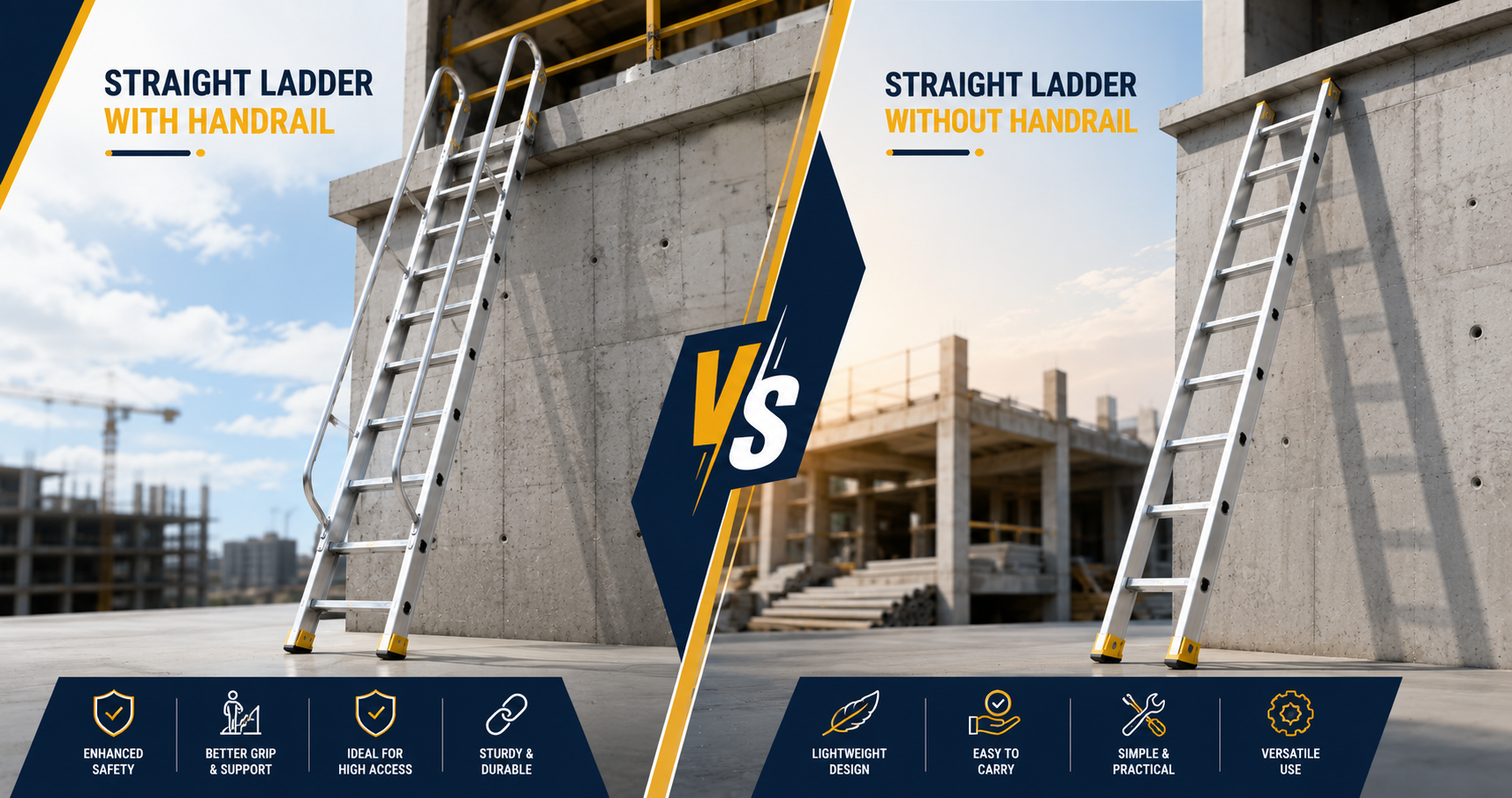
A straight ladder with a handrail is generally safer, especially for greater heights and frequent use, because it provides extra grip and fall protection while climbing or standing. A ladder without a handrail can still be safe for shorter, occasional tasks, but it relies entirely on the user's balance and the rungs for support.
Why Handrails Improve Safety
A handrail gives workers a continuous, stable grip point while ascending, descending or working from height. This matters most when:
The ladder is used frequently throughout the day
Workers need to carry tools or materials while climbing
The ladder reaches greater heights, where fall risk increases
Multiple people use the same ladder across shifts
Handrails reduce the chance of slips, especially on uneven ground or when hands are occupied.
When a Ladder Without Handrail Still Works
Ladders without handrails are lighter, more compact and easier to store or transport. They're a reasonable choice for:
Short-duration, low-height tasks
Occasional household or light maintenance use
Situations where portability matters more than extended support
That said, without a handrail, the user depends more heavily on rung grip and personal balance, which increases risk at height or with repeated use.
Comparing the Two
Factor | With Handrail | Without Handrail |
Fall protection | Higher | Lower |
Best for | Frequent, higher, industrial use | Short, occasional, light use |
Weight & portability | Slightly heavier | Lighter, easier to move |
Grip support | Continuous rail support | Rung-only support |
Recommended height use | Medium to tall | Low to medium |
Which Should You Choose?
For construction sites, industrial use or any repeated climbing task, a straight ladder with a handrail is the safer, more practical choice — the added grip support meaningfully reduces fall risk over time.
For light, infrequent household tasks at lower heights, a ladder without a handrail can be a compact, functional option.
Frequently Asked Questions
Are handrail ladders required by safety regulations?
Many industrial and construction safety guidelines recommend or require handrails on ladders used at height or for frequent access, though specific requirements vary by region and site policy.
Do handrails make ladders heavier?
Yes, slightly, but the added weight is generally a worthwhile trade-off for the improved stability and fall protection they provide.
Can I use a ladder without a handrail for industrial work?
It's not recommended for frequent or high-risk industrial use — a handrail ladder offers significantly better safety for repeated or elevated tasks.
Choose the Safer Ladder for Your Site
Steel Safe offers both straight ladders with and without handrails, built to industry safety standards for construction and industrial use.
View our handrail ladder range or explore ladders without handrail to find the right fit for your site.